
Market breadth depicted gains with 1,476 advances over 1,403 declines on the BSE. 140 stocks remained unchanged.

RBI had previously cut repo rate by 0.25 per cent each in January and March.

The year 2015 is likely to see lower rates to support growth and the Reserve Bank is expected to cut key policy rates by 0.25 per cent in February's monetary policy review meet, says a Bank of America Merrill Lynch report.

Reserve Bank of India governor Y V Reddy defended his decision to keep the rates unchanged by saying that all stakeholders should pay an uncertainty premia during uncertain times.

Despite several constraints, the policy has tried to support growth through more liquidity infusion.

The Reserve Bank of India (RBI) is expected to keep policy rates unchanged at a six-weekly rate review on Tuesday, ending a year-long cutting cycle as it focuses instead on underpinning the plunging currency.

'Some buyers believe prices may correct in the future.' 'This is unlikely. Many developers are increasing prices amid strong sales and inflationary trends.'
Monetary Policy Committee keeps key interest rate (repo) unchanged at 4% for 7th consecutive time; Consequently, reverse repo rate too remains unchanged at 3.35%; Bank rate also remains same at 4.25%;

With average returns of 18 per cent over the past year, listed real estate investment trusts (Reits) have clearly outperformed both the Nifty Realty index and the Sensex. Over the same period, Nifty Realty fell 15.5 per cent, while the benchmark index was largely unchanged. Steady office leasing, the Securities and Exchange Board of India's (Sebi's) decision to reclassify Reits as equity instruments, and ongoing portfolio expansion have strengthened the sector's appeal.

With crude and commodity prices ebbing and the twin deficits under check, the Reserve Bank should have cut the key policy rate to push investments and boost economic growth, India Inc said.
The Reserve Bank of India has increased the repo rate under the liquidity adjustment facility (LAF) by 25 basis points from 8.0 per cent to 8.25 per cent with immediate effect.

Among the Sensex firms, Bajaj Finance emerged as the biggest gainer by climbing 2.95 per cent. Tata Motors, Bajaj Finserv, IndusInd Bank, Sun Pharma, Mahindra & Mahindra, State Bank of India, Larsen & Toubro, HDFC, HDFC Bank, Maruti, Reliance Industries and Bharti Airtel were the other major winners. HCL Technologies, Axis Bank, ICICI Bank, Tech Mahindra and Titan were among the laggards.
The supply-side driven inflationary pressures, from food or fuel prices, would be mitigated by a neutral stance and a prolonged pause on rates, says Gaurav Kapur.

RBi pushes for reinvigorating private investments, clearing infra bottlenecks and providing big thrust to Pradhan Mantri Awas Yojana.
ICICI Bank, the second-largest private sector lender and state-owned Indian Bank on Monday raised their lending rates across all tenors in anticipation of a rate hike by the RBI later this week. The rates have been increased across all tenors under the marginal cost of funds-based lending rate (MCLR) system, a move that will make EMIs expensive for those who availed loans benchmarked against the MCLR. Under the revised rates, effective August 1, ICICI Bank's one-year MCLR has increased by 15 basis points or 0.15 per cent to 7.90 per cent, while the overnight MCLR rose to 7.65 per cent, as per information posted on the bank's website.
While the IT stocks traded firm since the start of the day, the BSE IT index soared to a 10-year high.

The chances of a rate cut in September have risen.

Achieving inflation target of 4 per cent, recovery after remonetisation and hardening profile of oil prices are some of the risks which the RBI is watching closely, says Gaurav Kapur.

The Reserve Bank of India (RBI) on Friday decided to leave the benchmark interest rate unchanged at 4 per cent but maintained an accommodative stance, implying rate cuts in the future if need arises to support the economy hit by the Covid-19 pandemic.

The Reserve Bank of India (RBI) on Friday kept the key repo rate unchanged at 4 per cent in view of rising inflation and faint signs of economic growth amid the gradual lifting of coronavirus related countrywide lockdown.

The repo rate or the short term lending rate was increased to 7.5 per cent from 7.25 per cent.

Benchmark policy rate unchanged at 6.75 per cent.
Mirroring weak cues from the overseas markets, the Sensex opened with a negative gap of 215 points at 10,765. The index thereafter tried to recover but slipped to lower levels after the Reserve Bank of India (RBI) announced its annual credit policy.

India's GDP is estimated to grow at 7.4 per cent in the financial year 2022-23 with rising prices triggered by the Russia-Ukraine conflict posing as the biggest challenge to the global economic recovery, Ficci's Economic Outlook Survey released on Sunday said. According to the survey, the Reserve Bank of India (RBI) is likely to start a rate hike cycle in the second half of 2022, while a repo rate hike of 50-75 bps is expected by the end of the current fiscal. The RBI is expected to continue supporting the ongoing economic recovery by keeping the repo rate unchanged in its April policy review, the survey said.
The Sensex opened 35 points higher at 17,051. Nervousness in morning trades saw the index slip marginally into red to a low of 17,012. It finally ended with a gain of 362 points at 17,378. Financial stocks ended with smart gains after the RBI left repo and reverse repo rates unchanged. The central bank, however, hiked CRR by 25 bps. HDFC soared 6% to Rs 2,881. SBI rallied 3.3% to Rs 1,794, and HDFC Bank added 2% to Rs 1,548. Grasim plunged over 6% to Rs 2,472.

Investors who decide to enter medium to long-duration funds should be cognisant of the risk.

Probably 35 bps. There could be even an encore in February 2023 to take the policy rate to 6.5% before the financial year ends, predicts Tamal Bandyopadhyay.
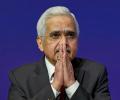
The highlights of RBI's bi-monthly monetary policy announced by Governor Shaktikanta Das:

The cost of deposits is on the rise, but banks can't raise interest rate on close to 60% of their loan books, points out Tamal Bandyopadhyay.
Headed by Urjit Patel, MPC for the fourth straight time kept the repo rate unchanged, at which it lends to the banks, at 6.25 per cent. The reverse repo, at which RBI borrows, will be 6 per cent.
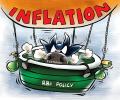
Das said that global economic activity has remained fragile and the surge in COVID-19 cases has subdued early signs of revival.
Consequently, the reverse repo rate under the LAF will remain unchanged at 7.5 per cent and the marginal standing facility (MSF) rate at 9.5 per cent.


Next bi-monthly policy statement on September 30.
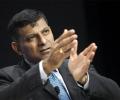
Former RBI governor Raghuram Rajan on Monday said the central bank will have to raise interest rates to tame inflation and the hikes need not be considered by politicians and bureaucrats as some "anti-national" activity. Known for his frank views, Rajan also said it was important to remember that the "war against inflation" is never over. "Inflation is up in India. At some point, the RBI will have to raise rates, like the rest of the world is doing," he said in a LinkedIn post.

While the rupee snapped a four-session downslide, it rupee could not cement intra-day gains as RBI kept short-term lending (repo) and cash reserve ratio unchanged, forex dealers said.

On the reduction in the SLR ratio, he said it was a signal from the point of view of long-term reforms.

Describing RBI policy as not surprising, State Bank of India Managing Director and Chief Financial Officer Diwakar Gupta said there is room for the central bank to look at the long-term and not too much on the short-term issues like rupee fall and the CAD.

The Reserve Bank of India's rate-setting panel on Wednesday started discussions to firm up the next bi-monthly monetary policy amid expectations that it might retain status quo on interest rate but change its monetary policy stance amid rising inflation on account of geopolitical developments.

The cut in the policy rate by RBI will help lower interest rates
